In recent years there has been an explosion in the number of private GP services, both within Liverpool and nationwide. Unfortunately, not all private GP clinics are created equal, and I’ve seen some pretty shocking behaviour from some of our competitors. If you’re thinking of using a private GP in Liverpool – or if a relative or friend plans to – you should do your due diligence to make sure you end up with the best quality care.
As an experienced private GP myself, here are (in my opinion) some major red flags:
#1 The service you’re looking at isn’t CQC registered
Almost all private GP services in England need to be registered with the Care Quality Commission (CQC). The CQC is the regulator of health and social care in England. They’re not infallible, and they love red tape – they initially insisted we needed a written risk assessment for the fish tank in our waiting room, which we thought was a bit OTT – but if a service is registered with the CQC, you have the peace of mind of knowing that the service is being assessed against some key standards.
In a few very niche circumstances, private GPs don’t need to be CQC-registered. This only applies if a doctor, or a group of individual doctors, work in a clinic room which already has CQC registration for another service. GPs working under this exemption can’t employ other staff such as nurses or managers, or form a company together to handle payments. They also can’t offer home visits, or video or telephone appointments, or even offer advice by email. So in practice, if an exemption does apply, they’re probably offering a very limited service. In comparison, at Formby GP we are CQC-registered, so we offer home visits, remote consultations, and we regularly answer email queries from our regular patients.
If a private GP service is supposed to be registered with the CQC and is operating without registration, this is a crime – it’s a breach of the Health and Social Care Act and they can be prosecuted.
If you’re looking at a private GP service near you which isn’t CQC-registered, in my opinion it’s a red flag – either they’re operating illegally, or they have a lawful exemption because the service they’re offering is very limited.
#2 They’re offering appointments with “clinicians”
If a private GP service is offering appointments with “General Practice clinicians” or “members of the General Practice team”, the person you’re seeing may not be a doctor. Check carefully the credentials of whoever you are seeing, and ask yourself if it’s good value for money.
There are times when other healthcare professionals can be invaluable, including privately – if you’re having a smear, a nurse may well be the best person for the job. But my longstanding position is that GPs and other doctors are the best healthcare professionals to see patients with “undifferentiated presentations”. Seeing patients with a new problem, who haven’t seen a doctor about this problem before, is one of the hardest jobs in Medicine. It is surprisingly difficult to make a diagnosis, and to weigh up all the different factors to choose the best treatment for a problem. That’s why, in my opinion, it’s worth making sure you’re seeing a GP, especially if you’re paying for private care.
#3 They’re illegally advertising prescription-only medication
In the UK, the Human Medicines Regulations (2012) make it illegal to advertise any prescription-only medicine to members of the public. Despite this, some other private GP services merrily advertise medication – including, in some cases, CONTROLLED DRUGS – to the public.
We all know that in the United States, you can barely turn on the TV without seeing adverts for diabetes drugs or blood thinners. But in the UK we have a proud tradition of not advertising prescription-only medications directly to patients. In the UK it’s widely accepted that the decision about which medication to take is best made by patients and doctors working in partnership together, and that advertising drugs direct to consumers has risks and downsides. That’s why the MHRA and ASA set strict rules about what doctors can say when advertising their services to the public.
Some private doctors ignore these rules and aggressively market drugs directly to patients, including on Facebook and Instagram. This is a red flag, in my view – if your private GP can’t follow basic rules designed to keep you safe, what else are they skimping on?
#4 Their reviews are written by their friends, or their employees, or bots
Healthcare is a private matter, and so patients are often reluctant to leave public reviews for private GP services. We have been open for over 3 years and, at the time of writing, we only have 35 Google reviews. Many of our patients are high profile or high net worth individuals, or are well known in the local area, so it’s hardly surprising they’re careful about what they put in the public domain.
If you’re reading a private GP clinic’s public reviews, it can be very entertaining to do a bit of snooping to work out if the person who wrote the review has any connection to the owners of the clinic. It’s surprisingly common for new clinics to have glowing reviews which turn out, after a bit of Googling or Facebook stalking, to be written by the clinic owner’s childhood friend or their employee. Sometimes there are a string of reviews written by people who bear the hallmarks of being bots. You can pay for online reviews! We don’t.
In my opinion, as an established and successful private GP, it’s a bit sad if a clinic has a string of reviews which don’t look genuine 😂
#5 You get locked into an expensive monthly membership
This is probably the BIGGEST mistake you can make, as a prospective patient, in my opinion! Private GP memberships often work out more expensive than just paying as you go. Private clinics which operate a membership model may try to make their prices sound affordable with phrases like “it’s cheaper than a daily coffee”. But it’s important to sit down and crunch the numbers to see if a private healthcare membership makes sense for you, in your specific circumstances. Many people are pretty healthy and only go to the GP a couple of times a year – in which case it often works out cheaper just to pay as you go. And if you do have complex needs and expect to visit the GP regularly, check the small print of any membership contract you sign – many have a “fair use” clause which limits the number of times you can be seen without incurring further charges.
At Formby GP, we do offer the option to pay a small fee annually for prescription charges and guaranteed GP appointment access – this is our “Priority Club” and it works out cost-effective if you need private prescriptions for more than 5 items per year, or if you need a lot of email advice. But we don’t offer an all-you-can-eat appointment offer, for good reason – it’s very difficult to find a price point which seems fair to both the GP and the patient. We have previously written about this in more detail.
#6 They’re using AI, or an external marketing agency, to pump out lots of glossy but soulless adverts
OK, I admit it – this one is just personal preference. But hear me out! Most private GP services’ social media accounts are indistinguishable from one another – lots of glossy graphics and generic content. It’s not adding much to the sum of world knowledge – you probably already knew you needed to sleep more and drink plenty of water – and it’s very hard to get a feel for who the doctors actually are. If you’re paying to see a private GP, one of the benefits is that you can get to know and trust your doctor. As a patient myself, I’d rather book in once I’ve got a sense of the doctor’s personality from their website and social media.
Also, AI is terrible for the environment! Just make your own graphics on Adobe and save the planet, guys 😘
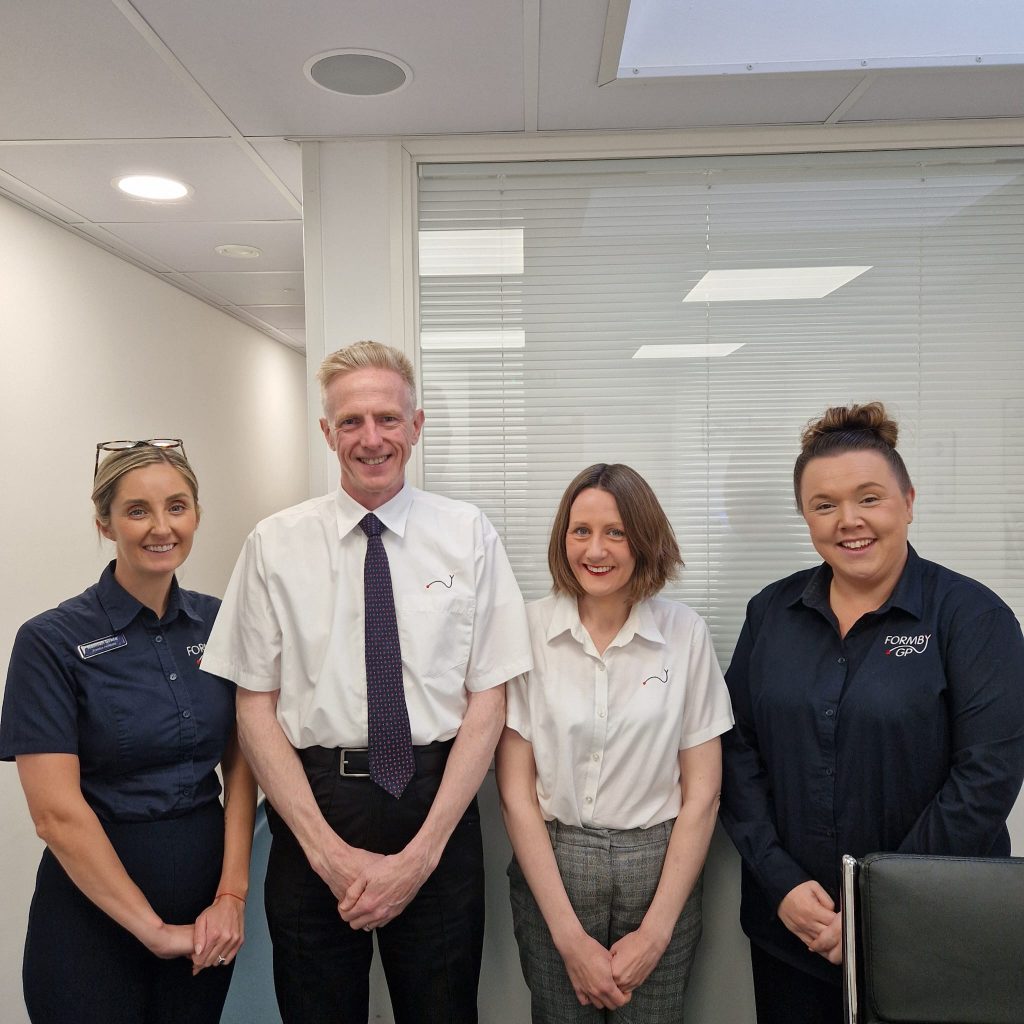
If you’re worried about your health and would like to book an appointment with a reputable, trustworthy, established private GP, we offer direct online booking so you can secure your appointment with Dr Heather or Dr John at Formby GP:
Alternatively, give us a call on 01704 617050 and chat to our friendly team.
If you’re looking for a private GP in Liverpool, a private GP in Liverpool city centre, a private GP in Merseyside, a private GP in Crosby, or a private GP home visit in Liverpool, contact Formby GP today.