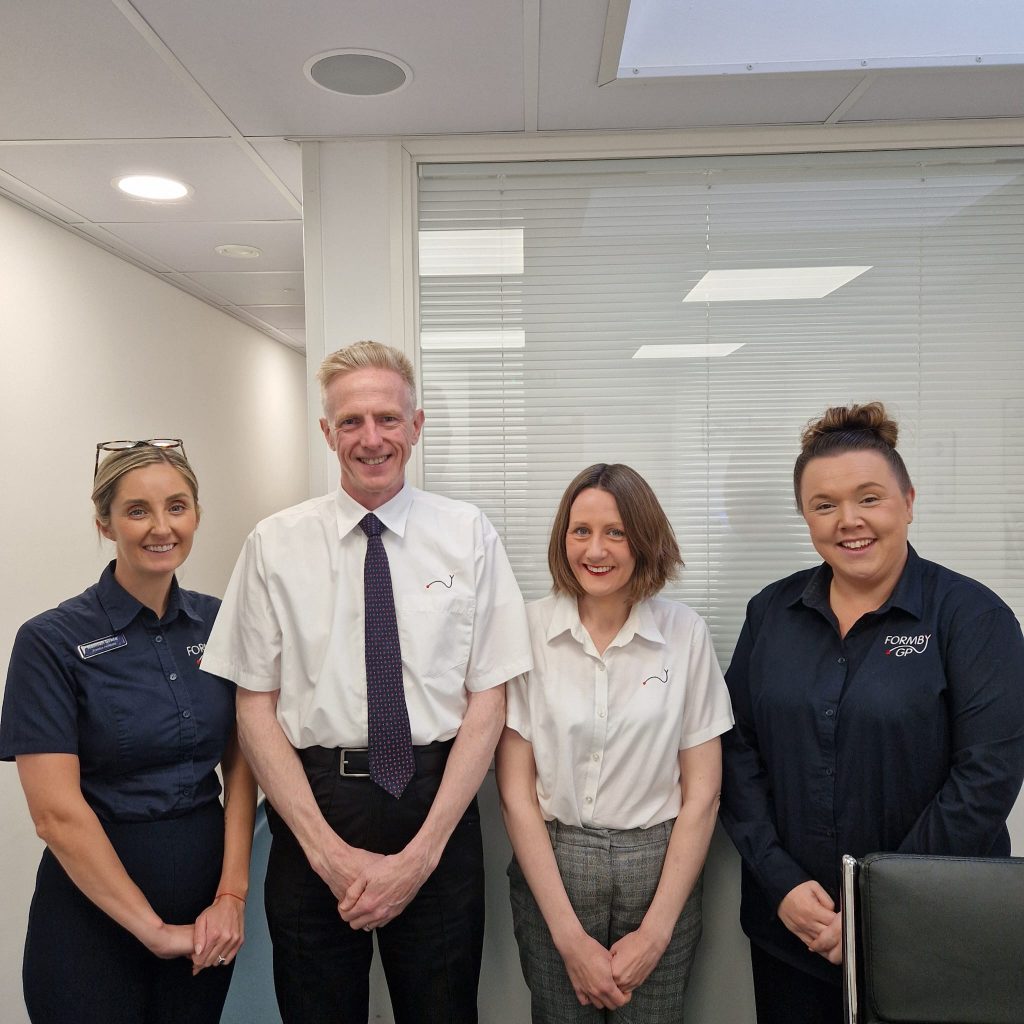
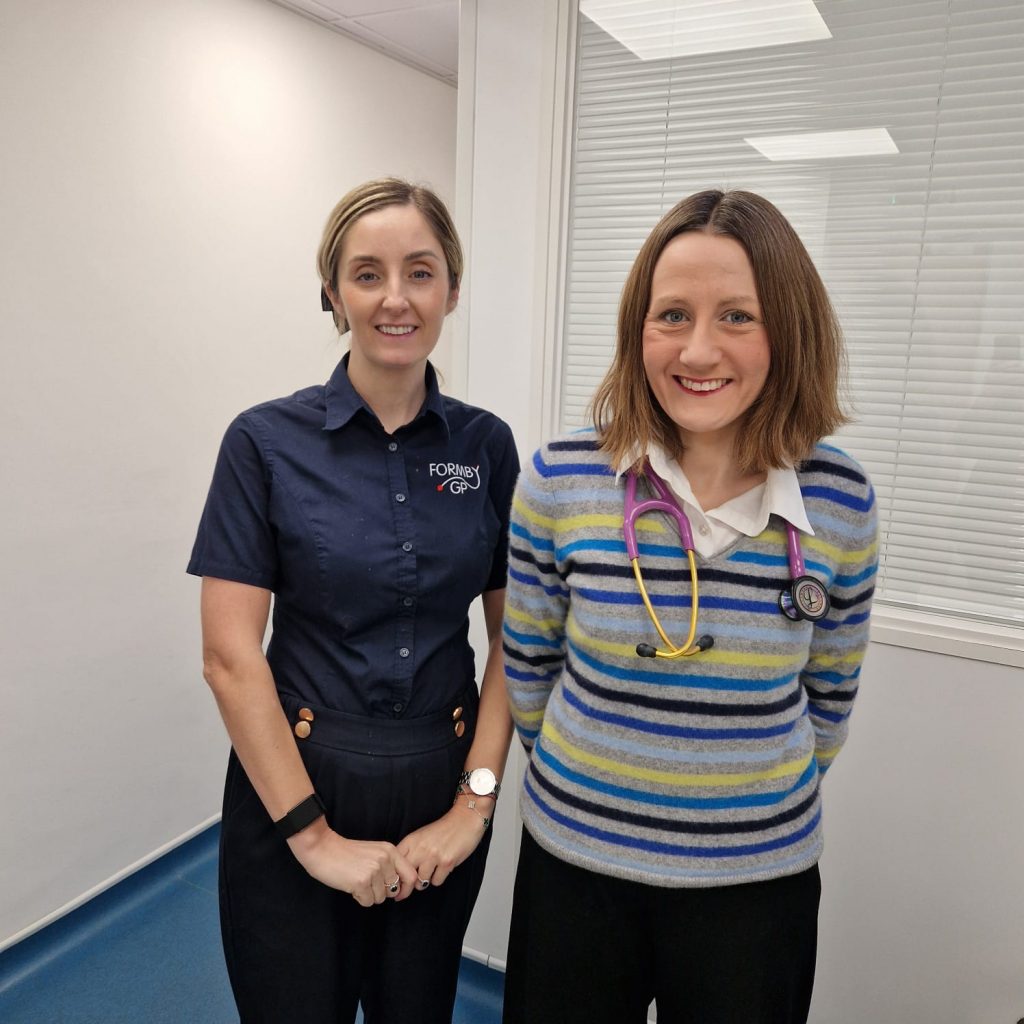
Dr John and Dr Heather are both Fellows of the Royal College of General Practitioners. This is the highest grade of membership, held by only around 7% of members of the College, and is awarded to recognise a “distinguished contribution to General Practice”.
This is what the “FRCGP” after our name stands for! We don’t normally make a big fuss about having letters after our name, but we are both really proud of our Fellowships, and what Fellowship represents.
Why should Fellowship matter to patients?
🦉Fellowship is only awarded to GPs who have been qualified GPs for at least 5 years, so anyone with the letters FRCGP after their name is likely to be a pretty experienced GP.
🦉Fellowship is only awarded to GPs who can demonstrate a significant contribution to the health and welfare of the community, and/or “the science and practice of Medicine”, and/or the aims of RCGP.
🦉We find that having been active within RCGP helps make us better doctors. We are more aware of the systems context in which primary care operates, and of the importance of evidence-based medicine. Our strong focus on avoiding overdiagnosis and overtreatment is thanks to the inspirational, ethical GPs we have met through RCGP.
In recent years there has been an explosion in the number of private GP services, both within Liverpool and nationwide. Unfortunately, not all private GP clinics are created equal, and I’ve seen some pretty shocking behaviour from some of our competitors. If you’re thinking of using a private GP in Liverpool – or if a relative or friend plans to – you should do your due diligence to make sure you end up with the best quality care.
As an experienced private GP myself, here are (in my opinion) some major red flags:
#1 The service you’re looking at isn’t CQC registered
Almost all private GP services in England need to be registered with the Care Quality Commission (CQC). The CQC is the regulator of health and social care in England. They’re not infallible, and they love red tape – they initially insisted we needed a written risk assessment for the fish tank in our waiting room, which we thought was a bit OTT – but if a service is registered with the CQC, you have the peace of mind of knowing that the service is being assessed against some key standards.
In a few very niche circumstances, private GPs don’t need to be CQC-registered. This only applies if a doctor, or a group of individual doctors, work in a clinic room which already has CQC registration for another service. GPs working under this exemption can’t employ other staff such as nurses or managers, or form a company together to handle payments. They also can’t offer home visits, or video or telephone appointments, or even offer advice by email. So in practice, if an exemption does apply, they’re probably offering a very limited service. In comparison, at Formby GP we are CQC-registered, so we offer home visits, remote consultations, and we regularly answer email queries from our regular patients.
If a private GP service is supposed to be registered with the CQC and is operating without registration, this is a crime – it’s a breach of the Health and Social Care Act and they can be prosecuted.
If you’re looking at a private GP service near you which isn’t CQC-registered, in my opinion it’s a red flag – either they’re operating illegally, or they have a lawful exemption because the service they’re offering is very limited.
#2 They’re offering appointments with “clinicians”
If a private GP service is offering appointments with “General Practice clinicians” or “members of the General Practice team”, the person you’re seeing may not be a doctor. Check carefully the credentials of whoever you are seeing, and ask yourself if it’s good value for money.
There are times when other healthcare professionals can be invaluable, including privately – if you’re having a smear, a nurse may well be the best person for the job. But my longstanding position is that GPs and other doctors are the best healthcare professionals to see patients with “undifferentiated presentations”. Seeing patients with a new problem, who haven’t seen a doctor about this problem before, is one of the hardest jobs in Medicine. It is surprisingly difficult to make a diagnosis, and to weigh up all the different factors to choose the best treatment for a problem. That’s why, in my opinion, it’s worth making sure you’re seeing a GP, especially if you’re paying for private care.
In the UK, the Human Medicines Regulations (2012) make it illegal to advertise any prescription-only medicine to members of the public. Despite this, some other private GP services merrily advertise medication – including, in some cases, CONTROLLED DRUGS – to the public.
We all know that in the United States, you can barely turn on the TV without seeing adverts for diabetes drugs or blood thinners. But in the UK we have a proud tradition of not advertising prescription-only medications directly to patients. In the UK it’s widely accepted that the decision about which medication to take is best made by patients and doctors working in partnership together, and that advertising drugs direct to consumers has risks and downsides. That’s why the MHRA and ASA set strict rules about what doctors can say when advertising their services to the public.
Some private doctors ignore these rules and aggressively market drugs directly to patients, including on Facebook and Instagram. This is a red flag, in my view – if your private GP can’t follow basic rules designed to keep you safe, what else are they skimping on?
#4 Their reviews are written by their friends, or their employees, or bots
Healthcare is a private matter, and so patients are often reluctant to leave public reviews for private GP services. We have been open for over 3 years and, at the time of writing, we only have 35 Google reviews. Many of our patients are high profile or high net worth individuals, or are well known in the local area, so it’s hardly surprising they’re careful about what they put in the public domain.
If you’re reading a private GP clinic’s public reviews, it can be very entertaining to do a bit of snooping to work out if the person who wrote the review has any connection to the owners of the clinic. It’s surprisingly common for new clinics to have glowing reviews which turn out, after a bit of Googling or Facebook stalking, to be written by the clinic owner’s childhood friend or their employee. Sometimes there are a string of reviews written by people who bear the hallmarks of being bots. You can pay for online reviews! We don’t.
#5 You get locked into an expensive monthly membership
This is probably the BIGGEST mistake you can make, as a prospective patient, in my opinion! Private GP memberships often work out more expensive than just paying as you go. Private clinics which operate a membership model may try to make their prices sound affordable with phrases like “it’s cheaper than a daily coffee”. But it’s important to sit down and crunch the numbers to see if a private healthcare membership makes sense for you, in your specific circumstances. Many people are pretty healthy and only go to the GP a couple of times a year – in which case it often works out cheaper just to pay as you go. And if you do have complex needs and expect to visit the GP regularly, check the small print of any membership contract you sign – many have a “fair use” clause which limits the number of times you can be seen without incurring further charges.
At Formby GP, we do offer the option to pay a small fee annually for prescription charges and guaranteed GP appointment access – this is our “Priority Club” and it works out cost-effective if you need private prescriptions for more than 5 items per year, or if you need a lot of email advice. But we don’t offer an all-you-can-eat appointment offer, for good reason – it’s very difficult to find a price point which seems fair to both the GP and the patient. We have previously written about this in more detail.
#6 They’re using AI, or an external marketing agency, to pump out lots of glossy but soulless adverts
OK, I admit it – this one is just personal preference. But hear me out! Most private GP services’ social media accounts are indistinguishable from one another – lots of glossy graphics and generic content. It’s not adding much to the sum of world knowledge – you probably already knew you needed to sleep more and drink plenty of water – and it’s very hard to get a feel for who the doctors actually are. If you’re paying to see a private GP, one of the benefits is that you can get to know and trust your doctor. As a patient myself, I’d rather book in once I’ve got a sense of the doctor’s personality from their website and social media.
Also, AI is terrible for the environment! Just make your own graphics on Adobe and save the planet, guys 😘
If you’re worried about your health and would like to book an appointment with a reputable, trustworthy, established private GP, we offer direct online booking so you can secure your appointment with Dr Heather or Dr John at Formby GP:
Alternatively, give us a call on 01704 617050 and chat to our friendly team.
If you’re looking for a private GP in Liverpool, a private GP in Liverpool city centre, a private GP in Merseyside, a private GP in Crosby, or a private GP home visit in Liverpool, contact Formby GP today.
Formby GP is committed to providing a safe, comfortable environment where patients and staff can be confident that best practice is being followed at all times and the safety of everyone is of paramount importance.
All patients are entitled to have a chaperone present for any consultation, examination or procedure where they feel one is required.
Regardless of the sex of the patient or clinician, you will be offered the option of having an impartial observer (chaperone) present for any intimate examination. Our trained staff routinely undertake this role and will:
Be sensitive and respect your dignity and confidentiality
Reassure you in the event of distress or discomfort
Be familiar with the procedures involved
Stay for the whole examination and be able to see what the clinician is doing, if practical
Be prepared to raise concerns if they are concerned about the clinician’s behaviour or actions.
The GP you see may also require a chaperone to be present for certain consultations.
The CQC is the independent regulator of health and social care in England. It is an executive non-departmental public body of the Department of Health and Social Care. The CQC monitors, inspects, and rates services, including NHS and private clinics.
Formby GP’s page on the CQC website can be found here.
You can give feedback on your experiences with us – good or bad – via the CQC’s Give Feedback on Care portal.
I just came across something interesting I thought would be worth sharing here. The NHS has a waiting list tracker tool called “My Planned Care”: this means you can see how long you are likely to be waiting for your first outpatient appointment, and for your treatment/surgery, if you have been referred to an NHS hospital. The waiting list figures are grouped by department, so it’s not an exact guide, and for urgent problems you are likely to be seen more quickly than these figures, while for less urgent issues you may be waiting longer.
Here is the page for the Trust which includes Southport & Ormskirk, and here is the page for the Trust which includes Aintree Hospital.
At Formby GP, we can refer into most local NHS outpatient clinics if appropriate. The entitlement to NHS care sits with the patient, not with the person referring, so hospitals can and do accept referrals from private GPs. We have something called an ODS code, which allows the local NHS health bosses to track our referral activity to make sure we’re not doing anything too eccentric!
I hope you’re having a good weekend. We have had a very hectic time recently, so we’ve spent today doing very little. Eddie wanted to play football in the back garden, using the bins as goals; he beat me 10-4!
On Monday we held a meeting of Formby GP’s Patient Liaison Group. Our PLG is a small, friendly group of people who meet every 3 months to give us feedback and help to shape our service. We are looking for new members! If you’d like to get involved, please email us on clinical@formbygp.net so we can invite you to future meetings.
As an additional inducement, we provide refreshments -John thought I’d bought too much food, but most of it went pretty quickly!
We are sometimes asked to prescribe and administer vaccinations privately.
Do drop us an email with your vaccine requirements and we will check them and provide a quote before booking your appointment, so that we can order in precisely what you need when you need it.
Many of our loyal patients choose to have their vaccines with us. Our premises are located opposite Freshfield Station so we are conveniently located for Formby residents. All our vaccines are prescribed by one of our doctors.
We pride ourselves on offering a convenient and obliging service. On some occasions, however, due to the vagaries of VAT rules, we are less competitive for certain vaccines than local pharmacies, so we won’t be offended if you decide to go elsewhere.
October is Breast Cancer Awareness Month, and many well-meaning people – including some healthcare professionals, and charities such as Breast Cancer Now – have been sharing posts about the importance of breast self-examination. Unfortunately, the reality is rather more nuanced than most people realise. Research evidence suggests that breast self-examination does NOT result in fewer women dying from breast cancer, and it can do more harm than good; women who self-examine their breasts are more likely to undergo a biopsy of their breast, but this does NOT translate into a reduction in rates of death due to breast cancer.
For that reason, at Formby GP we do not recommend routine breast self-examination for healthy women with no symptoms. Instead, we would recommend keeping an eye out for any changes (such as a lump in the breast; skin changes; or nipple discharge) and consulting a GP if you notice any of these symptoms. If you have new breast symptoms and are over 30, your GP will almost always do an urgent referral to breast clinic so that breast cancer can be ruled out. (If you are under 30, you may well need referral too, but in some circumstances your doctor will watch and wait first.)
If you’d like to read more about why the evidence base does not support routine breast self-examination, the Cochrane Review is available online here.
Another eventful meeting of RCGP Council – I am lucky enough to have been elected during very interesting times for our profession! Today’s meeting was very special and I am privileged to have played a part in today’s decision by Council to oppose Physician Associates working within General Practice. We did discuss a few other things too, believe it or not!
My husband John was speaking at a conference at BMA House today, so I had company on my trip to London! He was speaking at the sessional GPs’ conference; he gave a talk about how we have set up a private GP clinic which offers ethical, evidence-based care (as opposed to the screening factories and Kenalog-floggers which dominate the private sector currently…).
C64 – Physician Associate guidance for GP practices that employ Physician Associates
This paper was marked as confidential, though the day before Council it was leaked on Twitter (I refuse to call it X 😂), which generated a lot of debate about the now-infamous “blue box” – a grandfather clause which, if passed, would have allowed PAs already working in GP to work beyond the scope of practice guidance if their GP supervisor thought they were competent to do so. Although I had grave concerns about the inclusion of the blue box, my concerns went further than that – the free text analysis of the membership consultation made it patently obvious that many GPs who responded to the consultation felt that there was no role for PAs in General Practice at all, and, when speaking to GPs on social media and in “real life”, that is a view I hear articulated again and again. So, when I spoke, I proposed an amendment. Here is how I spoke to this motion:
I was absolutely horrified to see the final paragraph of the scope of practice guidance. To my mind it makes a mockery of everything we have done thus far – we have gone to considerable trouble and expense to define very clearly a set of red lines and a scope of practice for PAs working in Primary Care. We have gone to the effort and expense of arranging a consultation of our membership to ask them what they think – and the consultation turned up some absolutely horrifying stories of patient safety being put at risk. Colleagues, if we approve the statement in the blue box, then quite frankly I think we will deserve every consequence which comes our way. And consequences will come – a backlash from our members, perhaps even no confidence votes and falling membership numbers. I would argue that we will have wasted our members’ funds if we disregard all the work we have done thus far. We are a charity as well as a membership organisation. Our charitable objective is: “To encourage, foster and maintain the highest possible standards in general medical practice”. We will not be doing that if we approve the statement in box 2. Colleagues, I beg you to vote no to vote 2, for the sake of the reputation of our College and for the sake of patient safety.
In respect of vote 1, I would like to put forward an amendment and I have a seconder for this. The sentence as it is has two parts which are confusing. I suggest we first vote on the sentence “PAs can have an enabling role in General Practice”, then proceed to a vote on the red lines after this. A significant number of our members feel that there is no role for PAs in General Practice as demonstrated by the responses on the survey. Yet we have not asked Council its position on whether the college should support PAs in general practice. This is about patient safety and to ensure we encourage, foster and maintain the highest possible standards in general medical practice.
Kamila, as Chair, suggested that we continue to hear other Council members’ views on the motion as it currently stood, then we would return to the question of my proposed amendment later on. As Council operates under the Chatham House rule, I can’t namecheck individuals, but overall I was really impressed by the calibre of debate and the extent to which Council reps had clearly listened to their electorate.
At the end of the initial discussion, Kamila moved to the question of my proposed amendment. She confirmed that, as it was an amendment rather than a motion, a seconder was not needed. It was at her discretion as Chair whether to allow the amendment, and to her great credit she agreed that we could indeed change the first part of the motion such that we would first vote on whether Council opposed the use of PAs in General Practice, and then we would only vote about whether to reaffirm the red lines if Council did not reject the use of PAs in General Practice.
Council voted to oppose the use of Physician Associates in General Practice – 61% of GPs voted in favour of my amendment – and so a further vote on our previously-agreed red lines did not take place; they still stand from the last time we voted on them.
Given that, despite RCGP’s stance, there will still be some PAs working in General Practice, Council did approve three sets of guidance to support GP practices which do currently employ PAs. These are going to be edited as a result of the discussions today, so they won’t be published for, probably, a few weeks – watch this space!
I am absolutely chuffed to have been a small part of the fightback against this threat to patient safety. I had a lot of help from other Council members, but I’m not sure what those people would be happy for me to say publicly, so I’ll leave them to identify themselves publicly if they choose to. As ever in this role, I am guided by the RCGP’s charitable objectives: “to encourage, foster and maintain the highest possible standards in general medical practice.” Today Council did exactly that.
C65 – Post-election activity and policy asks
This paper wasn’t confidential, so if you’re a College member, do take a look at it in the members’ area of the website. Council members were very supportive of this paper overall. Several speakers praised the paper’s focus on “de-risking” GP partnership; many GPs are deterred from becoming partners because of very real concerns about unlimited liability, being personally bankrupted by being the “last man standing”, and onerous premises costs. There was also an interesting discussion about whether the inevitable direction of travel is that GP surgeries will get bigger – one partner at a small practice spoke passionately about the flexibility and responsiveness of smaller surgeries, and the fact that, for him, working in a small practice means he gets to know his patients better. Another Council member asked whether there is an evidence base to show whether working at scale actually improves outcomes. One Council member spoke movingly about the need to maintain the connection between patients and doctors, and keep alive the concept of “my doctor”.
I spoke as follows:
This is a great paper, and in particular I was pleased to see it spelled out that GPs are avoiding partnership not because they are lazy or selfish, but because the current contractual situation exposes GP partners to huge amounts of personal risk and liability. I think that the College should oppose any move to a fully salaried service – it is not what our members want, it would be incredibly expensive, and although it might paradoxically reduce the average GP’s workload, it would likely worsen the patient experience.
I absolutely endorse the suggestion in this paper that RCGP should support a mixed economy model, and that the College should call for action to address barriers to partnership, such as unlimited liability and the responsibility for premises ownership and maintenance.
Regarding discussion question 2, the enemy of continuity of care is urgent access – there is a need to be pragmatic and balance the two, with urgent care provided by whoever is available, and routine care delivered by the patient’s usual GP. If Wes Streeting wants to bring back the family doctor, he will need to stop berating us if we can’t see all non-urgent presentations same day. My personal experience suggests that it is very possible to deliver continuity of care and relationship-based care. We do this very well at our private practice. We offer continuity within a small team rather than guaranteeing it with one individual, though for non-urgent problems patients can choose to see the same doctor every time. We have half-hour appointments, so we can really build rapport with our patients – not achievable within the current NHS, but it would be a start if NHS GPs had the funding, premises and staffing to offer 15 or 20 minute GP appointments as the default. And one solution for delivering continuity in a profession dominated by part-time working is to buddy up and have small teams – so for example patients may not see the same GP every time, but they could see one of a small team of GPs every time. This system works very well in one NHS surgery I’m familiar with up in the north west – I’d be happy to try to put College staff in touch with the partners there if they want to use them as a case study.
C68 – Council forum options
This is a paper which probably won’t be of much interest to you unless you’re also on Council 😂 Essentially, we discussed potential ways in which Council members might be able to communicate formally between meetings. For informal discussions, we already have an unofficial Council WhatsApp group. The paper outlined various options, including the RCGP Member Forum and an official listserver, and then Council members made various other suggestions, including Signal and WhatsApp Communities. Further work will be done to take this forward. When I spoke on this item, I thanked the RCGP Council Members who administer the current informal group, Sonali Kinra and Victoria Tzortziou-Brown, for their hard work; and I suggested that we avoid moving across to the RCGP Members’ Forum to discuss Council business, because traffic and engagement is currently poor – having looked at it for the first time earlier this week, it appears to be used only by College Officers, RCGP staffers, and a handful of other enthusiasts.
C69a – Report to Council from Working Group on Preparations for the Possible Legalisation of Assisted Dying in one or more jurisdictions of the British Isles
For various reasons I didn’t end up speaking on this paper; and, although C69a is not confidential, there was a related paper, C69b, which was. For those reasons, I don’t plan to write about this discussion here.
C72 – Consolidated management report
Chris Askew gave us an update about his work as Chief Executive Officer of RCGP. I’ve got to say that I really like Chris and I think RCGP did well to recruit him to this role. He’s a really good manager – he welcomes questions and constructive challenge; he makes everyone feel listened to; and he is friendly and personable. I asked Chris a question during this section of the agenda; unfortunately there was a further outage during last week’s SCA. I facilitate half-day release teaching for GPST3s in Sefton and one of our local trainees was affected – she told me that she didn’t know what she was and wasn’t allowed to do in the immediate aftermath of the outage, and she was unsure if she was allowed to phone or email the RCGP exams team because technically she was still meant to be under exam conditions. I asked if the College could provide some kind of guidance for SCA candidates so they know what to do in the unfortunate event that there is an outage during their exam. Chris made it clear that this issue was already on the College’s radar and that it will be looked at.
C73 – Outcome of the 2024 Council elections and election report
I noted that turnout was very low, and that it seems to have been particularly low for the last few years; and I asked whether the move to online-only voting might have affected turnout and engagement. (Until a few years ago, RCGP members had the option to vote by post.) Chris promised to look into whether the drop in turnout had coincided with the removal of postal voting and will let me know.
C77 – Adopting the term GP Registrars
I had hoped to speak on this item, but time was limited – our PA debate earlier in the day had hugely overrun, so there was pressure for us to claw time back so people wouldn’t miss their trains – so I didn’t get chance. Happily, the motion passed with a resounding majority, and GP trainees will now be known as “GP registrars” rather than “Associates in Training” within RCGP. However, it is important to note that GP registrars will still be associate members, rather than full members, of the College. Anyway, I can’t wait to find out what “InnovAiT” journal ends up being renamed as – hopefully there’ll still be a pun in the title!
Conclusion
Due to efficient chairing from Kamila, we actually finished pretty much bang on time in the end! A few of us even had time for a post-Council drink before catching our trains home! Today was a wonderful day; I feel so privileged to have been in the room where such an important decision was made.
I remain, as ever, your faithful servant; keep in touch!
Many private GP services offer “health checks” and “MOTs”, in which you pay a fixed price and have a set panel of blood tests and other checks. Here at Formby GP, we don’t offer set “MOT” packages – why not?
The problem with one-size-fits-all “health checks” is that research evidence actually shows that they don’t work. There is actually a Cochrane Review – the highest-grade evidence there is – which shows that “health checks” do not reduce patients’ risk of death from all causes, do not reduce patients’ risk of dying from cancer, and have little to no effect on heart disease outcomes.
Furthermore, there is actually a risk that generic “health checks” can do more harm than good. Whenever we do tests, there is a risk of false positives or other “red herrings”, which can result in patients having unnecessary tests and treatment, as well as causing a lot of worry and stress. There is also the risk that a patient with symptoms may be falsely reassured by normal test results. This is why it is best practice only to do tests when they are needed – such as if a patient has symptoms of an illness, or certain risk factors, or a relevant family history.
That’s why, if you contact Formby GP requesting a health check, we will advise you to book a GP appointment first. Patients almost never request a health check for absolutely no reason – perhaps you’re feeling tired and run down, or you’ve gained some weight recently, or your brother had a heart attack last year and you’re worried it’ll be your turn next. In your GP appointment, we will discuss any symptoms you have, your family history, your risk factors for illness, and we can explore anything that is worrying you. Then we can agree together on a plan, including any tests you need.
This approach often saves our patients money, as you don’t get charged for lots of unnecessary tests. But more importantly, it means you get a better standard of care.
This is why we describe Formby GP as “ethical”; our top priority is doing the right thing for our patients, rather than doing what is easiest for us or makes us the most profit.
If you’re worried about your health and would like to talk to one of our friendly GPs, you can book an appointment online: